Completed September 9, 2026.
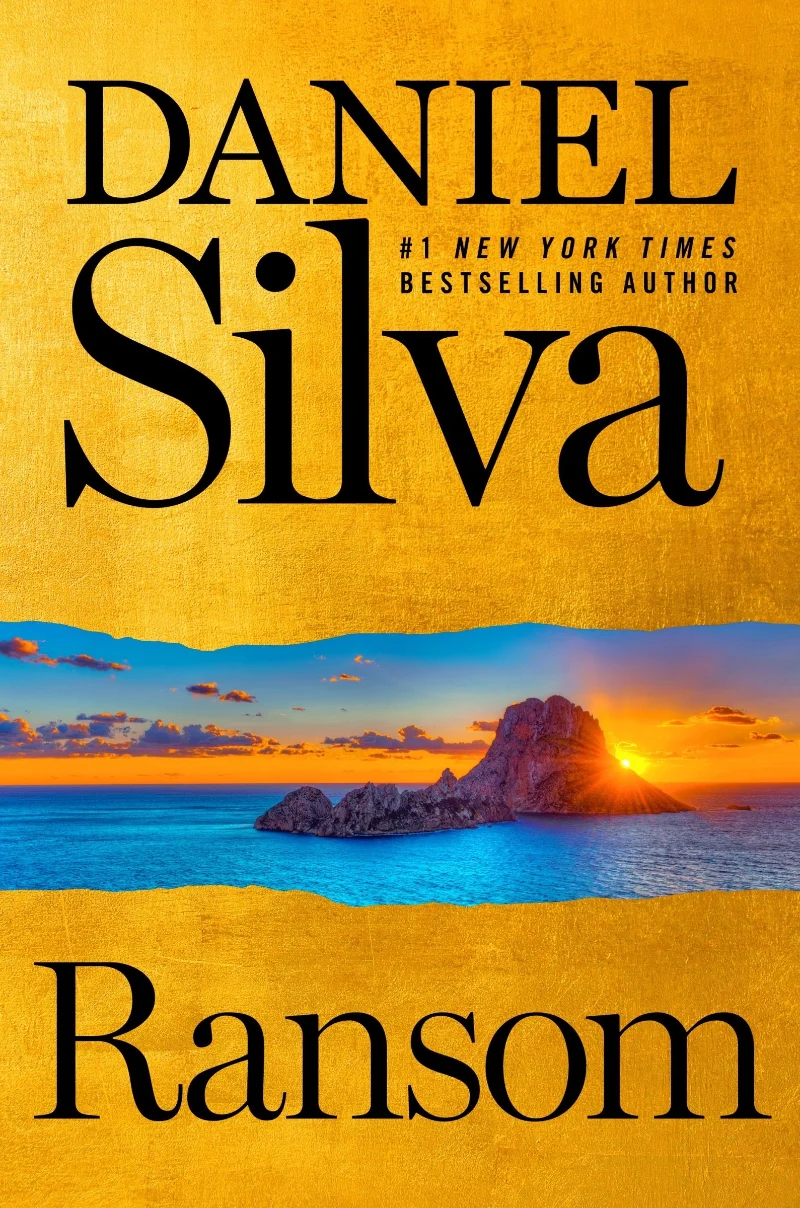
Silva’s Ransom opens as a sophisticated disappearance mystery set among Britain’s privileged elite, then steadily widens into an international espionage thriller shaped by Russian influence, compromised wealth, artificial intelligence, and modern drone technology.
The twenty-sixth Gabriel Allon novel is accessible even to readers unfamiliar with the series. Four former Cambridge classmates reunite for their annual holiday, this time at a lavish villa in Ibiza. Their host is Alice Winter, a glamorous social-media celebrity married to billionaire property developer Edward Knight. Her life seems enviable—beauty, money, social standing, and millions of followers—but the vacation exposes the tensions beneath that immaculate public image. Following a bitter quarrel with her friend Phoebe, Alice vanishes.
Meanwhile, Gabriel and his wife, Chiara, are enjoying a quiet summer at their cottage in Cornwall. The former Israeli intelligence chief has returned to the comparatively peaceful world of art restoration and is receiving acclaim for his latest work. When he attends a fundraiser at Edward Knight’s Devon estate, however, Alice is noticeably absent and Edward appears deeply troubled. Edward soon asks Gabriel to locate his missing wife, pulling the legendary operative back into a world he believed he had left behind.
The opening is unmistakably Silva: magnificent estates, valuable paintings, aristocratic company, and cultivated conversation all conceal more dangerous realities. Silva’s dry humor—particularly the affectionate exchanges between Gabriel and Chiara—brings warmth to a protagonist marked by decades of violence, grief, and clandestine service.
Silva also demonstrates that familiar language is not always ineffective language. His characters occasionally speak in phrases that might ordinarily be considered clichés, but within dialogue those expressions can feel natural, reveal personality, or briefly relieve tension. The distinction is important: a familiar phrase becomes troublesome when it substitutes for genuine observation, but it can succeed when it belongs convincingly to the person speaking. Silva generally employs such language with enough confidence and control to make it work.
What first appears to be a kidnapping motivated by money soon proves considerably more complicated. Gabriel discovers that both Alice and Edward are concealing important truths. Edward’s enormous property empire is also connected to suspicious Russian financing. The investigation ultimately uncovers relationships among compromised Western businessmen, sanctioned oligarchs, and Russian intelligence.
One of the novel’s greatest strengths is the tension between Gabriel’s traditional espionage methods and the technologies reshaping modern intelligence work. Gabriel mastered his profession through physical surveillance, informants, disguises, and meticulously constructed identities. In Ransom, he must also contend with social-media footprints, AI-assisted surveillance, cyber operations, and increasingly sophisticated drones. Although he remains the operation’s strategist, he depends upon familiar allies, including Sarah Bancroft, Ingrid Johansen, Christopher Keller, Graham Seymour, Julian Isherwood, and Detective Inspector Timothy Peel.
The novel also reaches back to the darker traditions of Cold War assassination. One scene involving a minute poison-delivery mechanism evokes the 1978 murder of Bulgarian dissident writer and broadcaster Georgi Markov, who was killed in London by a tiny ricin pellet in an operation attributed to Bulgarian state security with assistance allegedly supplied by the KGB. The parallel connects Silva’s contemporary technology to an older and very real history of covert murder.
This convergence of past and present raises the novel’s most compelling question: What place remains for an old-school intelligence officer in a world where almost anyone can be identified, followed, or killed remotely? Gabriel may no longer be the youngest or most physically formidable operative, but he remains exceptionally skilled at perceiving the design behind seemingly disconnected events.
Ransom offers an absorbing mystery, elegant European settings, financial corruption, evolving intelligence tradecraft, and a Russian threat that feels disturbingly plausible. It also finds a convincing role for its aging hero. Gabriel Allon does not need to be the fastest man in the room; what matters is that he still sees what everyone else has missed.
Recommended for readers who want current geopolitics and modern technology but still yearn for old-school tradecraft.
I review, I don’t rate. As a novelist, the paragraph is the verdict — not a star.
I write political thrillers too. If insider thrillers are your lane, the free Thriller Kit is a good place to start.